Francis Schaeffer once wrote that the secular viewpoints of academics trickle down to the general population through the arts, becoming what we call “popular culture” (2014). Thus, pop culture is the prevailing worldview expressed primarily through books, movies, music, television, advertising and visual arts. Popular culture is worthy of study for active Christians and those in ministry because it both shapes and reflects those within a culture. It is everywhere, like the air we breathe and it illustrates who we are, what we are, and tries to identify why we are here.
In the twentieth century, no man did more to shape the values of family and popular culture for good or evil than Walt Disney. The Walt Disney Company started in 1923 as a modest animation studio but as time passed, Walt Disney’s efforts impacted millions across the globe through his films, theme parks, and television shows (Brockus, 2004). As a filmmaker, motivator, and trendsetter, Disney’s work helped to define the literary and cultural sensibilities of generations of American children and introduced lasting and iconic expressions of childhood, that continue to this day.
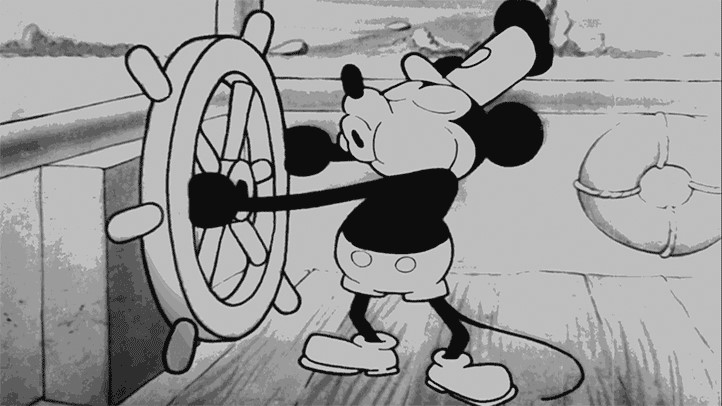
The origin of Disney lies in the form of a little mouse named Mickey. As we know him, Mickey Mouse parades a boy’s enthusiastic nature, an honest and sincere quality with a positive disposition. His natural spirit reflects small-town values and from the very beginning, Walt Disney was illustrating optimism, energy, innovation and a certain kind of innocence. It is by design, the story of the “American Way”—and one that has played a dominant role in shaping the collective memory of American history. Disney maintains a legacy of creating world-class stories and experiences for every member of the family. It reflects our dreams and symbolizes our cultural transformation into everything merchandise. Walt’s signature character eventually became not only a Disney corporate symbol but would serve as a common emblem of cartoons collectively (Apgar, 2015). If there is any doubt about the extent of Disney’s exposure in American culture and around the world, the evidence is overwhelming.
Considering the Mickey Mouse of old, Russian film director Sergei Eisenstein declared that Mickey Mouse was “America’s most original contribution to culture”, and cultural commentator Michael Real has written that Mickey is “recognized as one of the most universal symbols in the history of humankind” (Finch, 1975). In Mickey Mouse, the cultural interests of children, the business interests of the film industry, and the political and cultural interests of reformers seemingly merged. And today, something like a sacred connection exists between Mickey Mouse and idealized childhood (Apgar, 2015).
Mickey has become a symbol for a widespread family entertainment empire that has reached far beyond mouse cartoons. The Walt Disney Company encompasses full-length movies, theme parks, nature and family films, television shows, a set of cable channels, and extensive Disney merchandise. It has grown to an international media corporation with operations in more than 40 countries and over 166,000 employees (Global Footprint, n.d.). The media empire even includes giants such as the ABC television network, A&E, Lifetime, E!, the History Channel, ESPN, the Mighty Ducks hockey and Angels baseball franchises, real estate developments, Miramax and Touchstone movies with adult themes, and much more (Forbes, 2003).
While the breadth and influence of the entire corporation cannot be ignored, what has inspired the most public devotion is Disney’s efforts with animated films, theme parks, cartoons, and related merchandise (Brockus, 2004). Disney entertainment provides, for adults and children alike; a created experience that represents what many people would like the world to be: happy, innocent, simple, safe, honest, and kind. Amidst complications in our lives, Disney characterizes a utopian vision for which people desire, what Christians might equate to Eden.
One reason Disney’s appeal and merchandising is so effective is because when Disney releases a film, it is accompanied by mass marketing of toys, character bedsheets, promotions at fast-food restaurants, and more. An undisputed pioneer in cross-marketing was Walt Disney. Critic Henry Giroux voices the suspicion that Disney’s “pretense of innocence” functions as “little more than a promotional mask that covers over its aggressive marketing techniques and influence in educating children to the virtues of becoming active consumers” (Botkin, Botkin, & Phillips, 2008). A concern about this development is that all of life seems to be transformed into commodities, products to create and sell. Is this simply successful capitalism with neutral impact, or should we be concerned about corrosive effects on life experience?
Popular culture can influence our worldviews by creating imaginative narrative worlds for us to inhabits. “Critical examination should be guided by the basic principle that popular culture both shapes us and reflects us” (Forbes, 2003). Religion and culture are inseparable. When we watch a movie, play a video game, listen to a song, or read a novel, we are invited into the imaginative creative world of the work. Quite literally, we are invited to take on its worldview.
Disney has big vision and ambition to influence the world, and illustrates principles of curiosity, confidence, courage, and consistency. Isaac Botkin explains that the Christian film pioneers of the twenty first century must learn from the Disney legacy of entrepreneurial success in a highly competitive industry (2008). Find out what Disney wanted his staff to be and how he led them through habits of command that set technical and story standards that have yet to be surpassed.
Critics are concerned about the influence of Disney’s messages on our lives and understandings, but we also should ask why Mickey and Disney touch a chord with so many people. Is it because the Disney experience represents a life many persons yearn for, where things are happier and simpler? For persons in ministry, the appeal of Disney raises important issues. How can we take seriously these human yearnings? Christians must learn how to approach popular culture wisely, separating its gems of grace from its temptations toward idolatry.
Based on a biblical worldview, if our culture is tasteless and wicked it is because Christians are not doing their job. We cannot point fingers of blame at non-believers if our society is deteriorating. Non-Christians are simply living per their view of life. Therefore, those of us who understand the truth must live it out on every level of society. There is no area of society that is outside God’s concern. Cultural discernment and engagement are part of our Christian calling.
Resources
Apgar, G. (2015) Mickey Mouse: Emblem of the American Spirit. Weldon Owen.
Brockus, S. (2004). Where magic lives: Disney’s cultivation, co-creation, and control of America’s cultural objects. Popular Communication, 2(4), 191-211.
Finch, C. (1975) The Art of Walt Disney: From Mickey Mouse to the Magic Kingdoms, new concise edition. New York.
Forbes, B.D. (2003) Mickey Mouse as Icon: Taking Popular Culture Seriously. Word & World Vol. 23, 3 Summer 2003. Word & World, Luther Seminary. Saint Paul, MN.
Global Footprint (n.d.). Disney Careers. Retrieved from http://disneycareers.com/en/about-disney/global-footprint/
Lipp, D. (2013). Disney U: How Disney University Develops the World’s Most Engaged, Loyal, and Customer-Centric Employees. New York, NY: McGraw Hill.
Botkin, G., Botkin, I. & Pillips, D. (2008) Walt Disney: A Christian Critique. San Antonio:TX. Vision Forum.
Robertson, G (1998) “Snow Whitey?” Canadian Dimension. 45-46.
Schafer, F. (2014) Escape from Reason. Downersgrove, IL. Intervarsity Press.
The Walt Disney Company. (2017) About the Walt Disney Company. Retrieved 4/15/17 from https://thewaltdisneycompany.com/about/
Wasko, J., Phillips, M., & Meehan, E. (2001). Dazzled by Disney? The global Disney audiences project. London: Leicester University Press.
 M. Lindsay Brown
Leave a comment